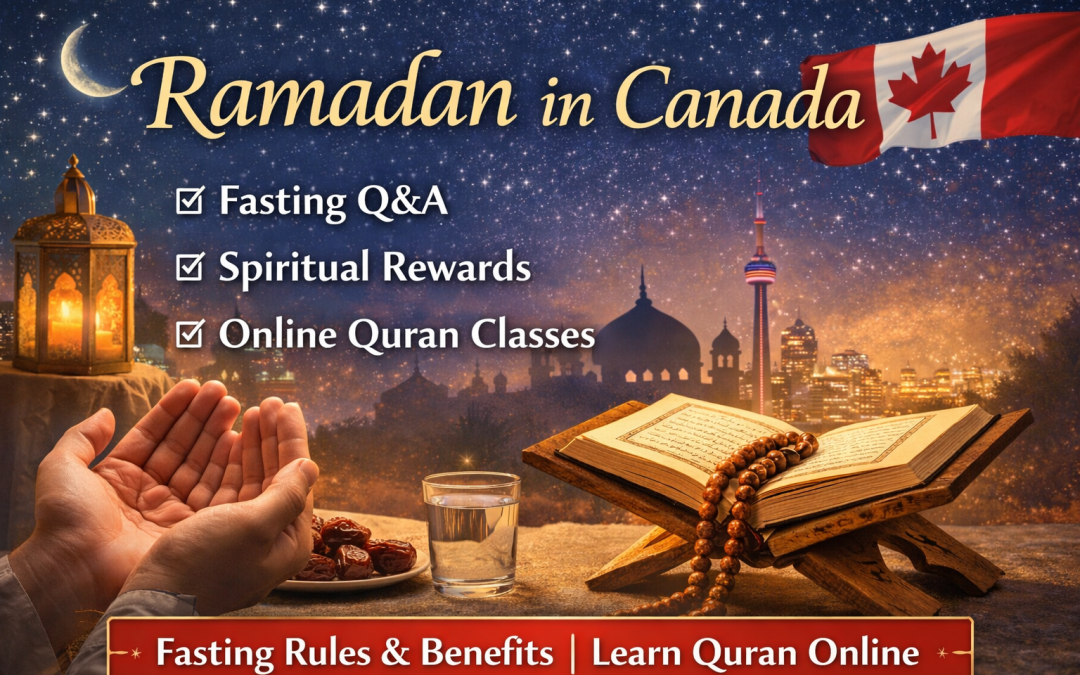
Fasting in Ramadan (Roza) – Meaning, Rules & Common Questions
Fasting in Ramadan is one of the Five Pillars of Islam. Every adult Muslim is required to fast from Fajr (dawn) until Maghrib (sunset) — abstaining from food, drink, and marital relations.
But fasting is not only physical. It is also spiritual.
It teaches:
- Patience
- Self-control
- Gratitude
- Discipline
- Empathy for those in need
For Muslims living in Canada — especially in cities like Edmonton, Calgary, Toronto, and Vancouver — fasting hours can be longer during summer months. This makes proper understanding of fasting even more important.
Spiritual Purpose of Fasting
Allah says:
“O you who believe, fasting has been prescribed upon you as it was prescribed upon those before you so that you may become righteous.” (Surah Al-Baqarah 2:183)
The goal of fasting is Taqwa (God-consciousness).
When we fast:
- We control our tongue.
- We avoid lying, gossip, and anger.
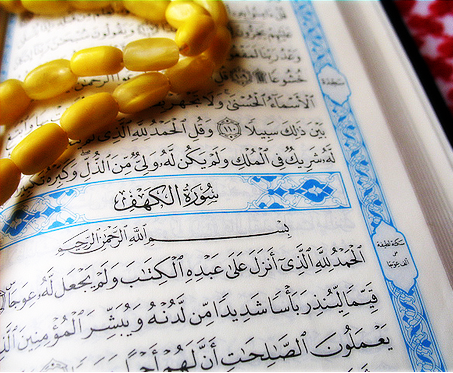
- We increase Quran recitation.
- We give charity.
- We improve our character.
Ramadan is not just about being hungry — it is about becoming better.
Common Questions About Fasting (Ramadan FAQ)
Below are some frequently asked questions by Muslim families in Canada.
1️⃣ Who Is Required to Fast?
Fasting is obligatory for:
- Adult Muslims (after puberty)
- Those who are physically and mentally capable
Children are encouraged to practice gradually so they become comfortable before reaching adulthood.
2️⃣ Who Is Exempt from Fasting?
Islam is a religion of ease. The following are exempt:
- Sick individuals
- Elderly who cannot fast
- Pregnant or breastfeeding women (if health is affected)
- Travelers
- Women during menstruation
They may either make up missed fasts later or give fidya (depending on their situation).
3️⃣ Does Vomiting Break the Fast?
- Intentional vomiting breaks the fast.
- Unintentional vomiting does not break the fast.
4️⃣ Does Using Toothpaste Break the Fast?
Using toothpaste does not break the fast as long as nothing is swallowed. However, many scholars recommend caution.
5️⃣ Does Injection or Medicine Break the Fast?
- Nutritional injections (like IV fluids) break the fast.
- Non-nutritional injections generally do not break the fast.
For specific medical concerns, consult a local scholar and doctor.
6️⃣ What If Someone Eats or Drinks by Mistake?
The Prophet ﷺ said that if someone forgets and eats or drinks while fasting, their fast is still valid. It is considered a blessing from Allah.
7️⃣ What Is the Reward of Fasting?
The Prophet ﷺ said:
“Every deed of the son of Adam is for him except fasting. It is for Me, and I will reward it.”
Fasting has a special reward known only to Allah.
Healthy Fasting Tips for Long Ramadan Days in Canada
Because fasting hours in Canada can be long (especially in provinces like Alberta and Ontario), here are helpful tips:
✔ Eat balanced Suhoor with protein and fiber
✔ Drink plenty of water between Iftar and Suhoor
✔ Avoid excessive caffeine
✔ Do not skip Suhoor
✔ Rest when possible
✔ Recite Quran during low-energy hours
Ramadan should strengthen your body and soul — not exhaust you.
Connecting Fasting with Quran Learning
Fasting and the Quran go together.
Ramadan is the month when:
- The Quran was revealed
- Taraweeh prayers include Quran recitation
- Many Muslims complete one full Quran
For families in Canada, combining fasting with structured online Quran classes helps create a strong Ramadan routine at home.
Even 30 minutes of daily Quran reading or Tajweed practice can make fasting more meaningful.
Ramadan in Canada – Make It a Month of Growth
Whether you are fasting in Toronto, Calgary, Vancouver, Montreal, Winnipeg, or Halifax — remember that Ramadan is a gift.
It is:
- A chance to correct mistakes
- A chance to build habits
- A chance to reconnect with the Quran
- A chance to guide your children
This Ramadan, let fasting purify your body — and let the Quran purify your heart.